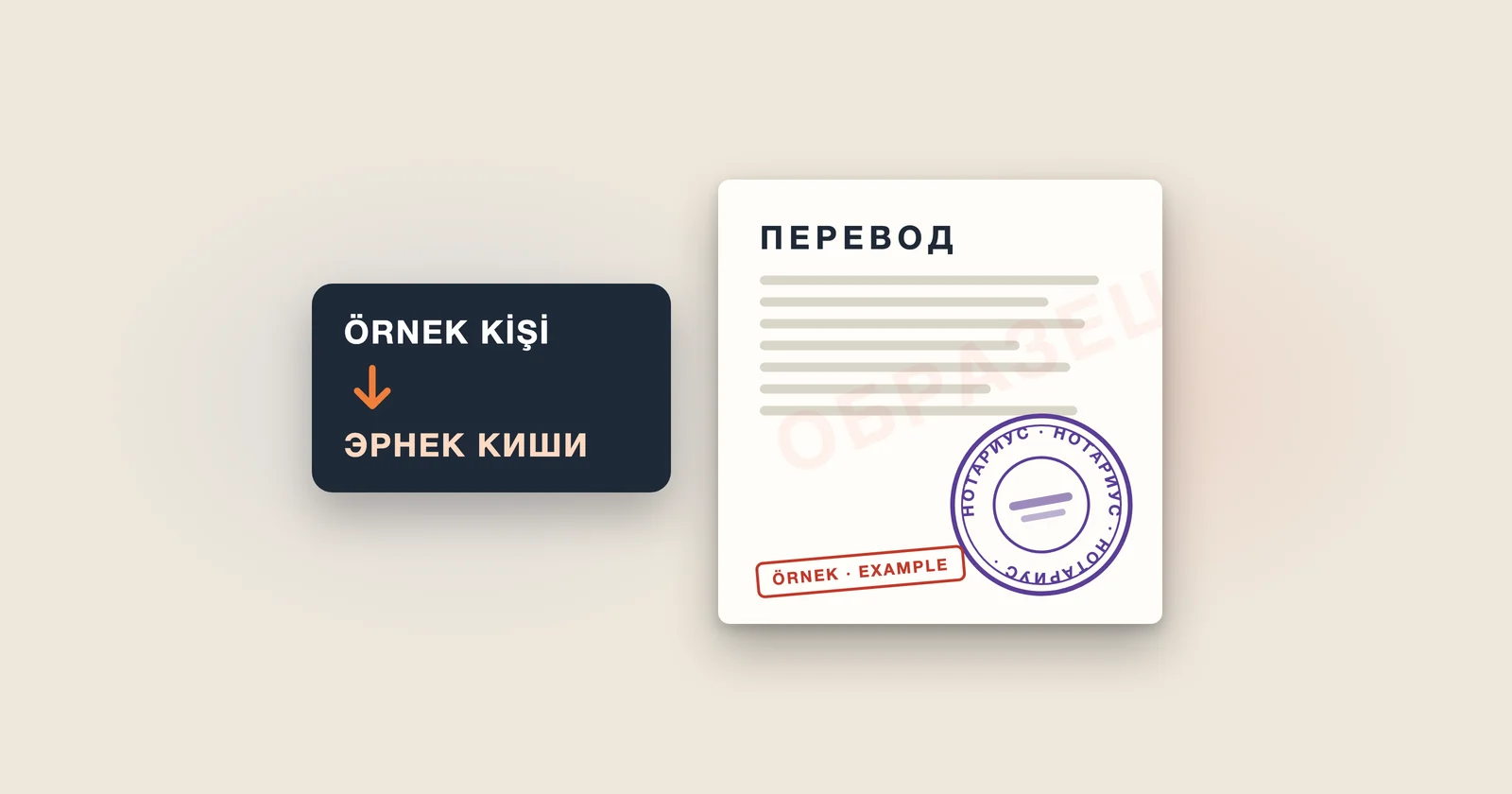
Translating documents for Russia comes up in a temporary residence permit, a residence permit, a work permit, citizenship, university admission or marriage. Documents in Turkish that will be used in Russia are translated into Russian, and for procedures inside Russia the translation is usually submitted with a Russian notary's certification. Applications to the Russian missions in Türkiye, on the other hand, use a sworn Russian translation with notary approval and an apostille.
This guide maps out the whole picture. It covers which documents are translated for which application, where the apostille goes, and how your name is written in Cyrillic. It also explains how Languvi prepares a translation certified by a notary in Russia when an application asks for one.
Where translating documents for Russia comes in
Applications for Russia go to the Russian missions in Türkiye or to offices in Russia. Each has its own document list.
Temporary residence and residence permits (РВП · ВНЖ)
People living in Russia for a long time first apply for a temporary residence permit (РВП) and then for a residence permit (ВНЖ). These applications often ask for notarised Russian translations of the passport, the birth certificate and the marriage certificate.
Work permit (разрешение на работу)
For people working in Russia, work permit applications often ask for Russian translations of the passport and the diploma. The employer usually handles the process.
University admission and diploma recognition (нострификация)
Russian universities ask for the school-leaving diploma, the transcript and the passport. To have a diploma earned abroad recognised in Russia, apostilled translations of the diploma and the transcript are requested. Our transcript translation guide explains how course titles, credits and grades are handled.
Citizenship and marriage (ЗАГС)
Russian citizenship applications often ask for a birth certificate, a marriage certificate and the passport. To marry or register a civil status event in Russia, you submit a birth, marriage or single status certificate to the civil registry office (ЗАГС).
Application | Documents often requested | Office |
|---|---|---|
Temporary residence and residence permit | Passport, birth certificate, marriage certificate | Migration department of the Russian Interior Ministry |
Work permit | Passport, diploma | Migration department (the employer applies) |
University and recognition | School-leaving diploma, transcript, passport | University |
Citizenship | Birth certificate, marriage certificate, passport | Migration department |
Marriage and civil status | Birth, marriage or single status certificate | ЗАГС |
How does the apostille work for Russia?
Russia has been a party to the Apostille Convention since 31 May 1992, and Türkiye is a party too. Official documents issued in Türkiye are therefore used in Russia with an apostille.
The apostille is done in the country that issued the document. The district governor's office, the governor's office or the court apostilles the original of a Turkish document, and the translation is prepared after this step. That is why getting the apostille on your originals before you leave Türkiye saves you from going back to Turkish offices later.
Two routes: a translation prepared in Türkiye or one certified by a Russian notary
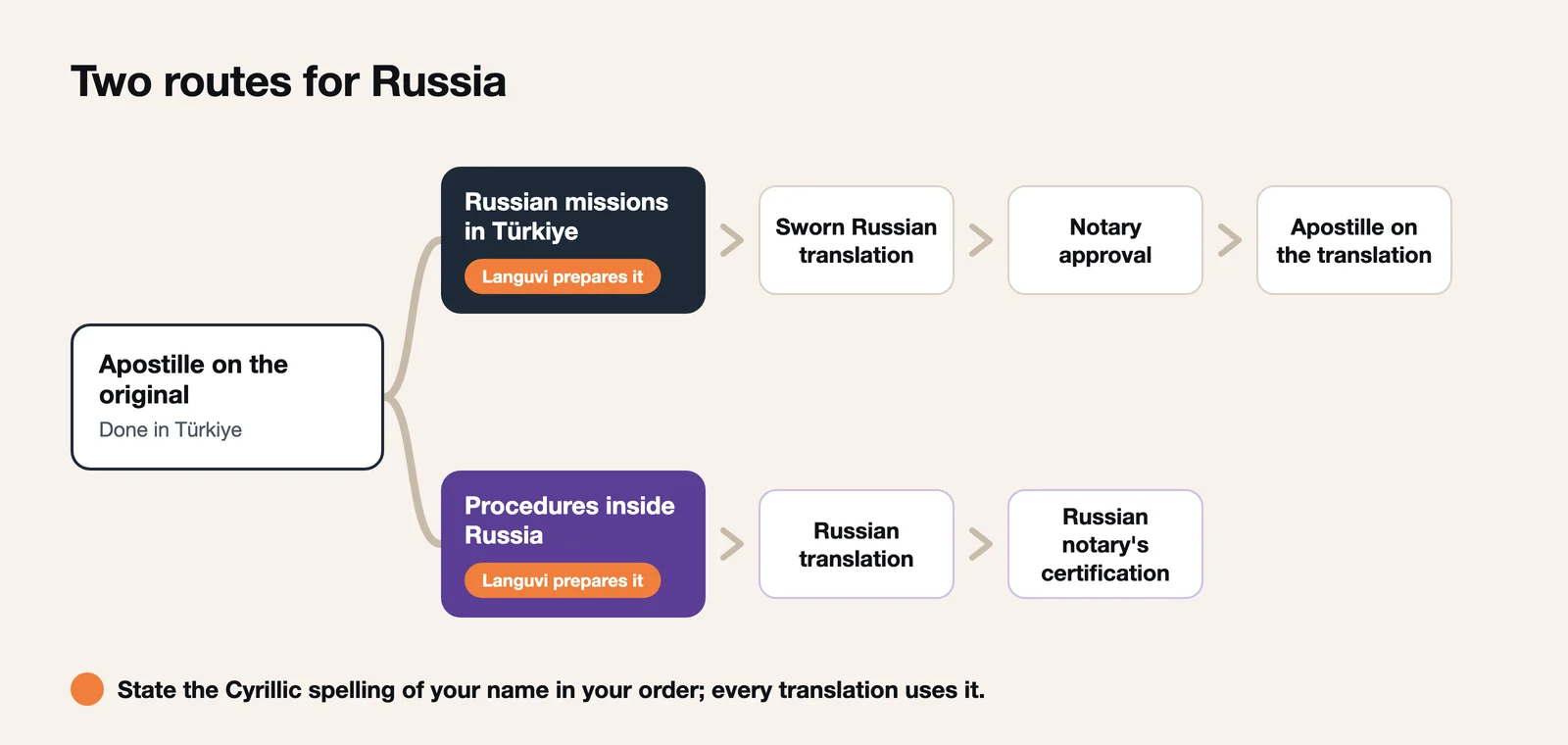
A translation for Russia is prepared on one of two routes, depending on where the document will be used. Languvi prepares the translation on both.
Documents for the Russian missions in Türkiye: the original is apostilled, and then the document is translated into Russian by a sworn translator. The translation is notarised and then apostilled. An order opened from Languvi's Russia page comes with notary approval and an apostille added.
Procedures inside Russia: offices in Russia usually ask for a translation certified by a Russian notary. On this route, the apostille on the original is enough, and a Russian notary certifies the Russian translation. Languvi prepares this translation too, through its authorised translators; just write to us through the contact form.
Writing your name in Cyrillic
In documents issued in Russia, your name is written in Cyrillic. If the same name is spelled differently across documents, it can raise questions in applications. That is why it matters that every translation spells your name the same way.
If you already have a document issued in Russia, such as a visa, a migration card or a work permit, state the spelling of your name used there in your order. Our translators follow that spelling. Your new documents then match the Russian documents you already hold.
Preparing the documents step by step
Preparing documents for a Russian application usually runs in this order:
- 1
Decide where the document will be used: a Russian mission in Türkiye or an office in Russia.
- 2
Get the document list and a recent copy of each document.
- 3
Have the originals of official documents apostilled by the district governor's office, the governor's office or the court.
- 4
Upload the documents to Languvi, choose Russian as the translation language and state the Cyrillic spelling of your name.
- 5
For documents going to a mission, keep notary approval and the apostille in the order; for a Russian notary's certification, write to us through the contact form.
- 6
Add the translations to your file together with the originals.
This order saves you from getting the same document twice. The apostilled originals are useful again in your later applications in Russia.
Checks before you apply
Russian applications are most often delayed by a missing apostille or an inconsistent spelling of the name. Keep these points in mind:
Get the apostille on the original before you leave Türkiye.
Decide whether the document goes to a mission in Türkiye or to an office in Russia.
Keep the Cyrillic spelling of your name identical in every translation.
Prepare all pages of your passport, with a translation if one is requested.
Keep the originals together with their translations.
Frequently Asked Questions
Do translations for Russia need an apostille?
Applications to the Russian missions in Türkiye usually do. The sworn Russian translation is notarised first and then apostilled. An order opened from the Russia page comes with both added.
Do you also prepare translations certified by a Russian notary?
Yes. If your application asks for a translation certified by a notary in Russia, Languvi prepares it through its authorised translators. Just write to us through the contact form.
Which documents are translated for a residence permit?
The passport, the birth certificate and the marriage certificate are translated most often. If the list names another document, it needs translating too; you can add it to the same order.
How is my name written in the Russian translation?
Your name is written in Cyrillic. If you hold a Russian visa or another Russian document, just state the spelling used there in your order, and we prepare the translation to match it.
Which documents are translated for diploma recognition?
The diploma and the transcript are translated most often. Both need an apostille. University admission may also ask for the school-leaving diploma. We can translate these documents into Russian in one order.
Can documents from Russia be translated into Turkish?
Yes. Documents issued in Russia can be translated into Turkish for use in Türkiye. A notary approval can be added to these translations when it is needed.
Conclusion: When translating documents for Russia, what matters most is where the document will be used. Documents for the Russian missions in Türkiye get a sworn Russian translation with notary approval and an apostille, while procedures inside Russia ask for a translation certified by a Russian notary. Languvi prepares both; you upload your document and complete the Russian translation in one order. See our page on Russian translation with apostille for Russia, or upload your document now on the order page.