
The difference in sworn vs notarized translation in Türkiye comes down to who signs the page. A sworn translation is certified by a translator who has taken an oath before a Turkish notary, with their stamp and signature. A notarised translation is the same sworn translation with one more layer: the notary's certificate, signature and seal underneath.
So a notarised translation is not a different kind of translation. Every notarised translation starts life as a sworn translation, but not every sworn translation needs to be notarised. Which one you need depends on the exact wording used by the office asking for it.
This guide explains what each one proves, compares them side by side, then walks through the situations where Turkish offices and foreign authorities ask for one or the other.
What is a sworn translation in Türkiye?
In Türkiye a sworn translator (yeminli tercüman) is someone who has proved their language skills to a notary and taken an oath there. Under article 96 of the regulation implementing the Notaries Act, the notary must be satisfied beyond doubt that the translator knows the language, for example by checking their degree or other certificates. The oath is then recorded in a signed report kept at that notary's office. The report also lists the languages the translator knows, which are the languages they provide sworn translations in.
On a sworn translation, the translator adds a statement that the translation matches the original, followed by their name, stamp and signature. That statement is the translator's personal guarantee: responsibility for the accuracy of the translation rests with them.
What is a notarised translation?
A notarised translation is a sworn translation that a notary has then certified. The Notaries Act lists translation among a notary's duties. Article 103 says the notary adds a certificate under the translated text; where a sworn translator was used, it must name the translator and give their address. The notary dates, signs and seals it.
The regulation adds one more rule: a notary may not have a translation done by anyone whose oath record is not on file in that office. That is why a translation is notarised at the notary where the translator took their oath. The notary's certificate ties the translation to a named, registered translator, which is what gives offices confidence in it.
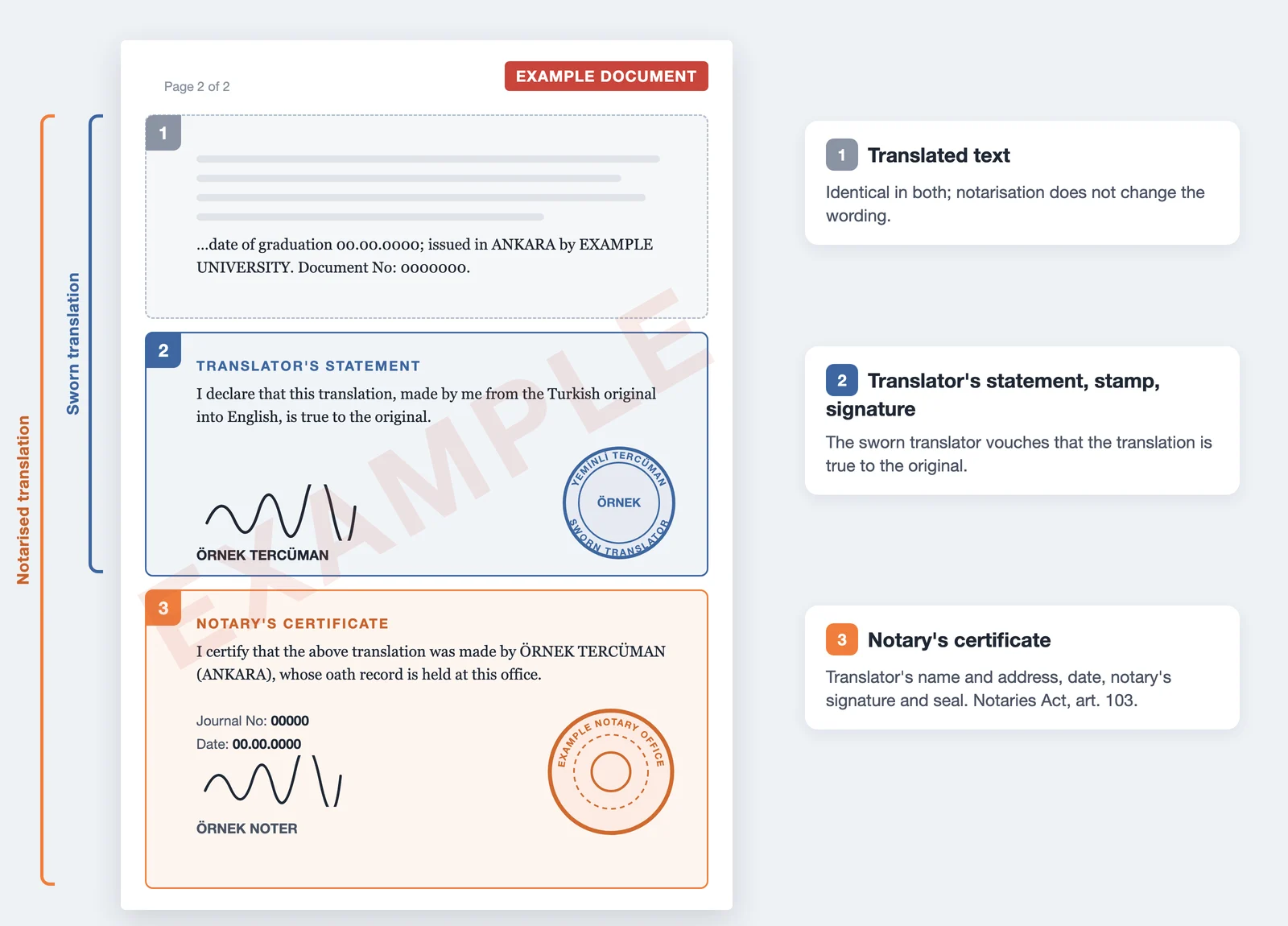
Sworn vs notarized translation: a side-by-side comparison
The translated text is identical in both cases. What changes is who signs beneath it and what that signature proves.
Sworn translation | Notarised translation | |
|---|---|---|
Who signs? | The sworn translator | The sworn translator, then the notary |
What does it prove? | That the translation matches the original, on the translator's statement | That it was made by a translator sworn at that notary's office, by official certificate |
What's on the page | Translator's statement, stamp, signature | All of that, plus the notary's certificate, journal number and seal |
Can it take an apostille or legalisation? | Not directly | Yes; the apostille certifies the notary's signature |
Commonly asked for | Some applications, internal or information use | Official procedures in Türkiye, applications abroad, the apostille chain |
The apostille row matters more than it looks. Under the Apostille Convention, notarial acts are public documents. An apostille certifies the signature and seal of a public official. A sworn translator's own signature is not that of a public official. So any translation that needs an apostille or Foreign Ministry legalisation goes through a notary first.
Which one do you need?
Offices usually say exactly what they want. Reading the wording on their document list is the quickest way to choose the right translation.
When a sworn translation is enough
If the office asks for a translation "by a sworn translator", or "by a sworn translator or approved by official authorities", a sworn translation is enough. The Presidency of Migration Management's work and life guide, for instance, accepts that wording for passports not written in Latin letters. Documents used for information only rarely need a notary either:
Contract reviews, tenders or specifications inside a company
Applications where the office states that a sworn translator is sufficient
Translations kept for personal records or reference
When you need a notarised translation
Most Turkish public offices ask for a "notarised Turkish translation" of foreign documents. The residence permit document list, for example, asks for an apostille and a notarised Turkish translation of birth or marriage certificates issued abroad. Municipal marriage offices ask foreign nationals for a notarised Turkish translation of their passport. Typical cases include:
Passport and certificate of no impediment translations for marrying a foreign national in Türkiye
Documents from abroad for a residence permit or citizenship application
Powers of attorney signed abroad and used at the land registry
Translations going abroad that will receive an apostille or consular legalisation
If you are bringing documents from your home country, our guide to using foreign documents in Türkiye explains the apostille on the original as well.
When an apostille or consular legalisation is involved
For use abroad, the chain usually runs: sworn translation, notary certification, then an apostille from the governorship or district governorship. For countries outside the Apostille Convention, Foreign Ministry legalisation and consular legalisation take the apostille's place. The Ministry's own legalisation guide sets out that order step by step.
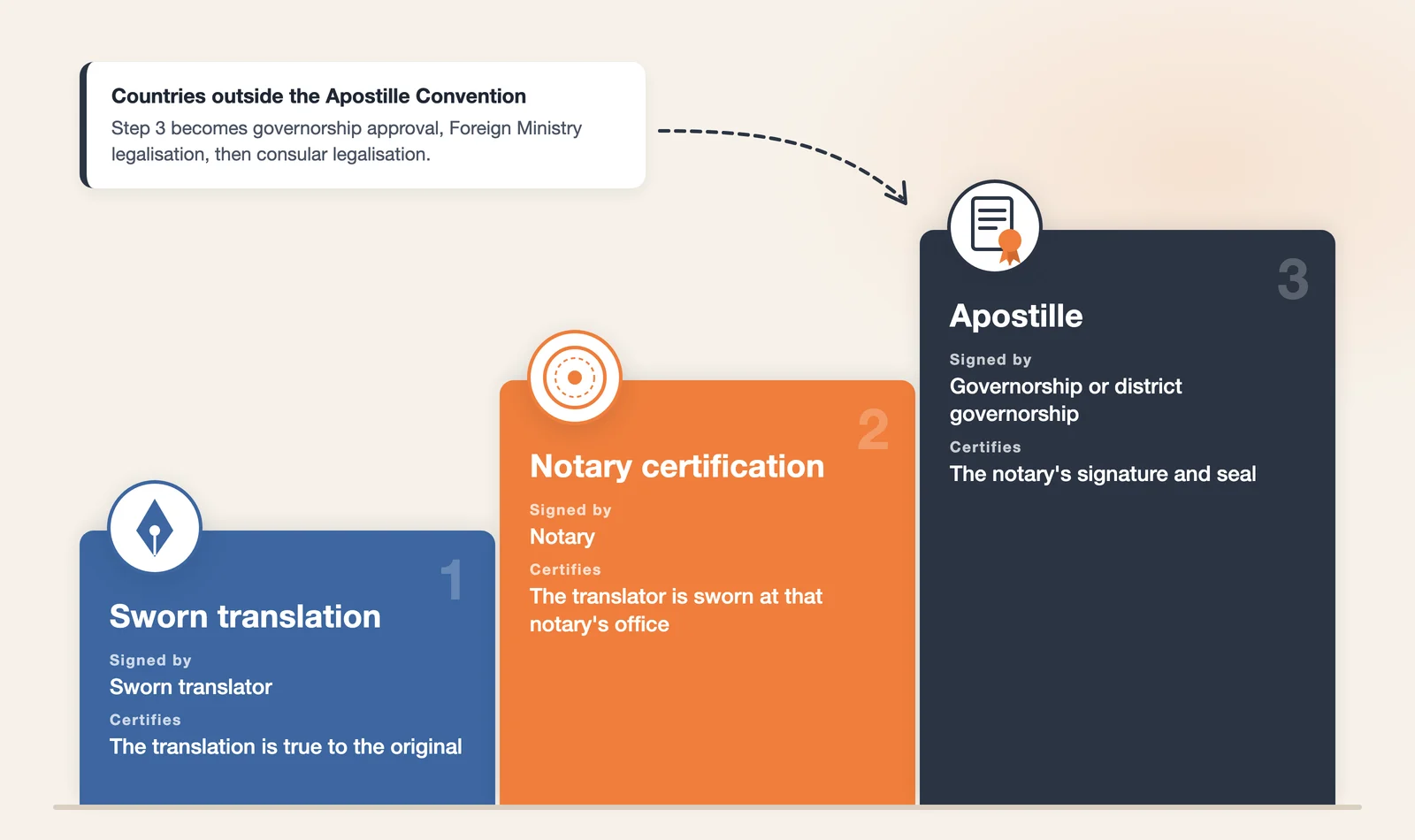
A quick checklist before you order
Answering these four questions before you apply saves you from ordering the wrong kind of translation:
- 1
What wording does the office use: "sworn", "notarised" or "apostilled"?
- 2
Will the document be used in Türkiye or abroad?
- 3
Is the destination country a party to the Apostille Convention?
- 4
Are names spelled exactly as in your passport and your other documents?
The last point is easy to overlook. Marriage offices, like residence permit offices, expect names to match across the passport, birth certificate and certificate of no impediment translations. Even a one-letter difference can get an application sent back.
Sworn or notarised translation with Languvi
On Languvi you handle both from one place. Once you upload your document, you see the price and estimated delivery date within seconds, before you pay. With a sworn translation, official documents are delivered with the sworn translator's stamp and signature.
If you also need notary certification, an apostille or consular legalisation, add them to the same order; the notarised translation process runs on one platform from start to finish. Every document goes to a translator who knows the subject and is checked before delivery. You receive it in your account, the mobile app, by e-mail or WhatsApp, with signed originals sent by courier when needed.
Frequently Asked Questions
Is a notarised translation more accurate than a sworn one?
The translated text is the same; notarisation doesn't change it. The notary's certificate officially records that the translation was made by a translator sworn at that office. Accuracy remains the sworn translator's responsibility in both cases.
Can I take a sworn translation to a notary later?
A translation is notarised at the notary where the translator took their oath. In practice the translator who made it usually handles that step. When you add notary certification to a Languvi order, we complete it for you.
Can a notarised translation be apostilled?
Yes. A notarised translation is a notarial act, so the governorship or district governorship can issue an apostille on the notary's signature. For countries outside the Apostille Convention, the same document goes for Foreign Ministry legalisation instead.
The office just says "translation". Which should I choose?
For any official application, a sworn translation is the safest starting point. If the office also wants notary certification or an apostille, it says so on its document list. When it does, simply add that step to your order.
I live outside Türkiye. How do I get a notarised translation?
Languvi handles it for you. You upload your document online; the sworn translation and notary certification are prepared in Türkiye, with an apostille added if needed. Signed originals are sent to your address by courier.
Conclusion: In a sworn vs notarized translation, the difference lies in the signature under the text. A sworn translation is signed by the translator; a notarised one also carries the notary's certificate and seal, which makes it ready for an apostille or Foreign Ministry legalisation. The office's document list tells you which one you need. Upload your document on our order page to see the price and delivery date within seconds.